In this guide
✦ Kilifi at a glance
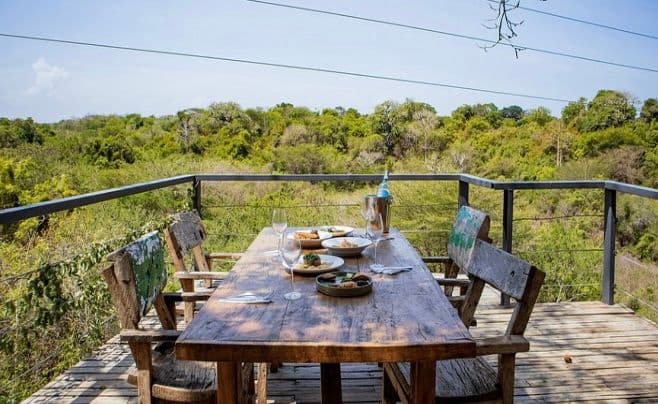
Why People Love Kilifi
This guide is written by people who have lived in Kilifi and still have roots here. Everything you are about to read is personal, up to date and accurate. This is everything you need to know about Kilifi in one place, real tips from people who know it well.
If Watamu is the beach holiday, Kilifi is the life decision.
Kilifi is what happens when you take the natural beauty of the Kenyan coast and add a community of artists, wellness practitioners, musicians, and people who came for a week and simply never left. Unlike Watamu to the north or Diani to the south, Kilifi has not been shaped by mass tourism. It has been shaped by the people who chose to live here.
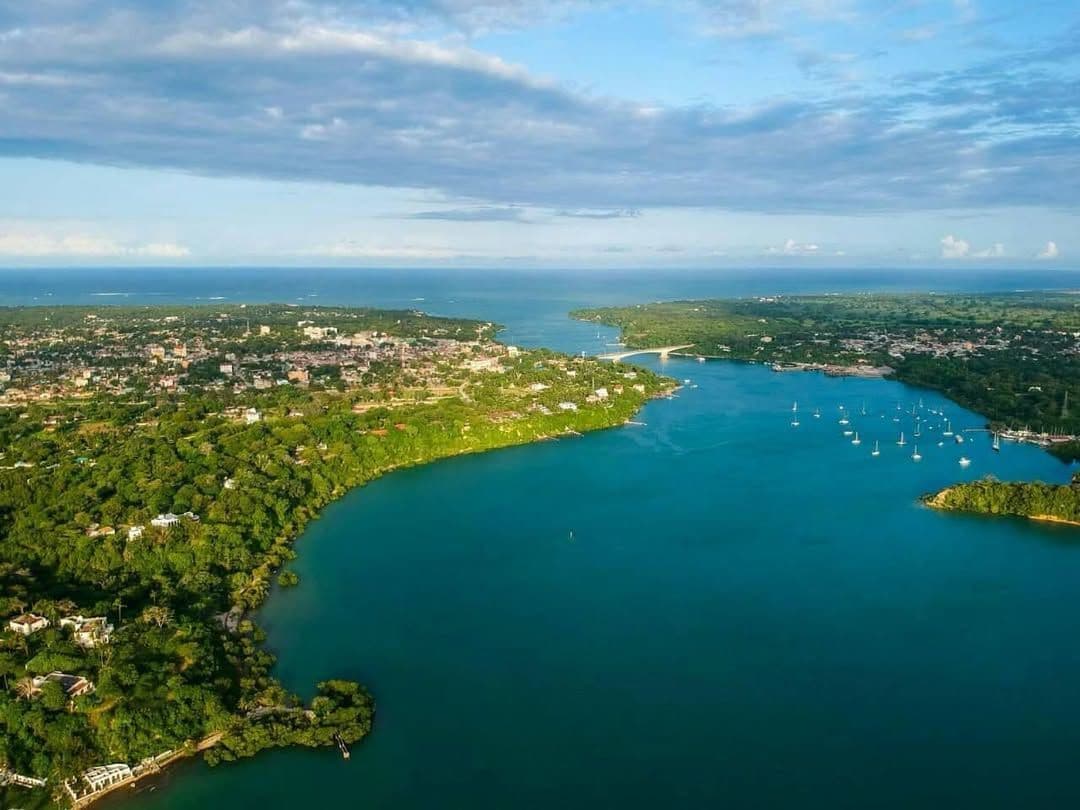
The town sits on the banks of Kilifi Creek, a vast tidal inlet that stretches inland like a lake. The creek is the soul of the place: calm, sheltered, impossibly beautiful. Around it, a community of Kenyan families, creative expats, yoga teachers, and small-business owners have built something genuinely special. There is even a recording studio in the baobab trees. Baobab Studio attracts international artists who come to lay down tracks in one of the most extraordinary natural settings on the continent. There are weekly community yoga sessions, great parties with a wonderful music scene, friendly people and a genuine wellness focus woven into daily life.
Kilifi is the capital of Kilifi County with government offices and the infrastructure of a real functioning town. It is a hidden gem that will surprise you. It is peaceful in general and more of a place where people are living life and building businesses rather than a destination that relies entirely on tourism. Less touristy than Diani or Watamu, it has a beautiful and subtle energy that is genuinely special and should be experienced, especially if you have a little more time to spend or want a quieter, more authentic holiday on the Kenyan coast.
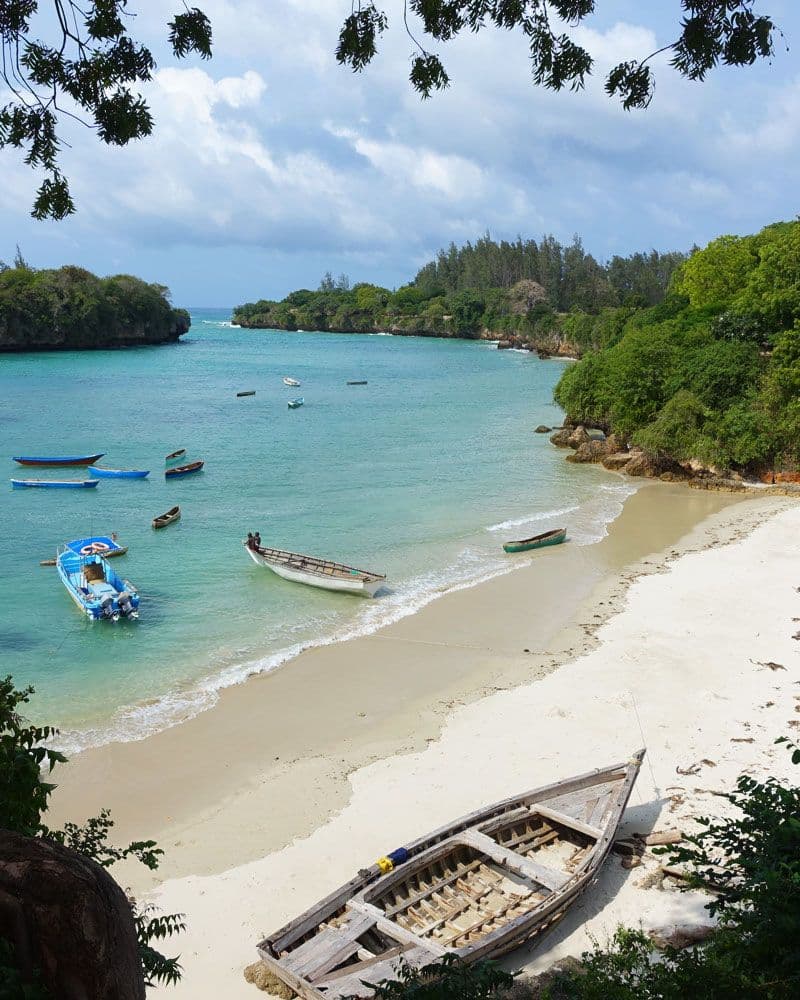
It is also a great place to holiday with plenty of activities and is very family and children friendly. The vibe is laid back and relaxed, and sometimes it takes a little time to discover all the things that are happening because events are often organised through word of mouth and community groups. Dhow rides on Kilifi Creek are special, and Bofa Beach is stunning and often quiet, with many mornings where you will have the whole beach to yourself on an early morning walk.
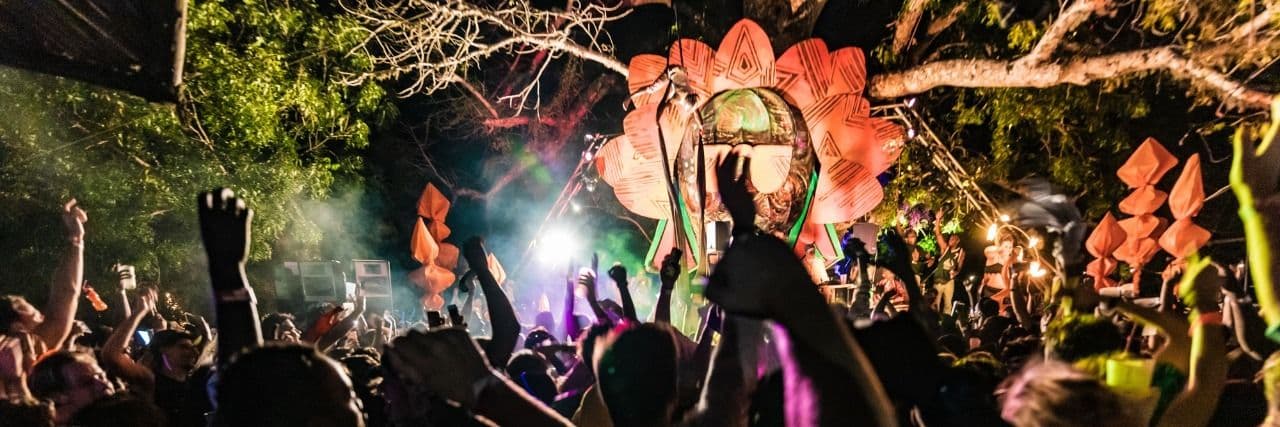
It does get busy though! Around New Year, the Kilifi New Year Festival brings in huge numbers of visitors, incredible parties and some of the best music on the East African coast. There is also the Kilifi Wellness Festival, which happens twice a year. Although Kilifi is peaceful day to day, it also has some great parties and an awesome music scene that will genuinely surprise you if you catch it at the right moment.
There are fewer restaurant and cafe options than Watamu or Diani, but they are slowly increasing and the ones that exist are lovely. Around Christmas and New Year, Kilifi transforms completely. Your experience here will heavily depend on the time of year you visit. Some periods are much quieter and more private, others are buzzing and social. Kilifi has fewer hotel options than other coastal towns but some stunning rental property options that represent exceptional value.
How to Get to Kilifi
By air
Fly from Nairobi with Safarilink, Kenya Airways or Jambojet to one of three airports: Mombasa (Moi International), Malindi or Vipingo. From Mombasa the drive to Kilifi takes 1.5 to 2 hours and a taxi costs around KSh 6,000 to 8,000. From Malindi it is 1 hour and a similar price. From Vipingo it is just 30 minutes and around KSh 3,000, making it the closest and most convenient option when available.
Uber tip for Mombasa arrivals
Uber operates in Mombasa and you can use it to reach Kilifi from the airport, which makes the journey simple and avoids price negotiations. However there is no Uber in Kilifi or Watamu, so for your return journey to the airport you will need to arrange a taxi in advance. Your accommodation can usually help with this.
By train from Nairobi
The SGR train from Nairobi to Mombasa is comfortable and popular. There are two services: the express and the intercounty, which stops at various stations along the route including Voi. Tickets cost KSh 1,000 to 4,500 depending on class, and in practice the difference between first class and economy is minimal so economy is good value. There is no luggage limit, which is a real plus. Arrive at the terminus well in advance as there are multiple security checks, especially at Nairobi Terminus. From Mombasa arrange a taxi north to Kilifi. The intercounty service is also useful if you are combining Tsavo safari with a coast trip: board at Voi and arrive in Mombasa, then drive to Kilifi.
By road from Nairobi
Driving from Nairobi to Kilifi takes 8 to 9 hours. Many people turn this into a road trip, stopping for safari at Amboseli or Tsavo along the way. Car rental in Kenya is possible but takes more organising than in other countries. Use only trusted and reviewed companies. Be careful on Kenyan roads as traffic rules are not consistently applied. Our team is working to partner with reliable car rental providers and very soon you will be able to book directly through this website. Trusted taxi transfers will also be bookable through the same feature.
By matatu or public bus
Matatus are local public minibuses that run regularly between Mombasa and Kilifi. Taking a matatu is the most adventurous option as a first-time visitor but can be a great experience. Take care of your belongings. Almost everyone in Kenya speaks English so if you are confused just ask. Public buses from Nairobi operate through companies such as Mash, Tahmeed and Coast Bus, booked directly at the station. These are not recommended for tourists due to road safety concerns at night.
Two essential travel tips
Always agree the price with any taxi or boda boda driver before you get in, not after. And ask your accommodation to help arrange transfers when possible. They often have trusted drivers they work with regularly.
Best Time to Visit Kilifi
Your experience in Kilifi is shaped both by the climate and by the tourist calendar. Some periods are very quiet and private, others are lively and social. Knowing the difference will help you choose the right time for what you want.
The seasons
April, May and June are the long rains. October and November bring shorter, less reliable rains. Outside those windows it is hot and dry. November through March is very hot and dry, with midday temperatures reaching 34 to 35 degrees Celsius. July through October is a little cooler and drier, with temperatures around 27 to 29 degrees during the day and as low as 24 degrees on cooler evenings. Even during the rainy periods it rarely rains for many days in a row and the sun comes out between showers.
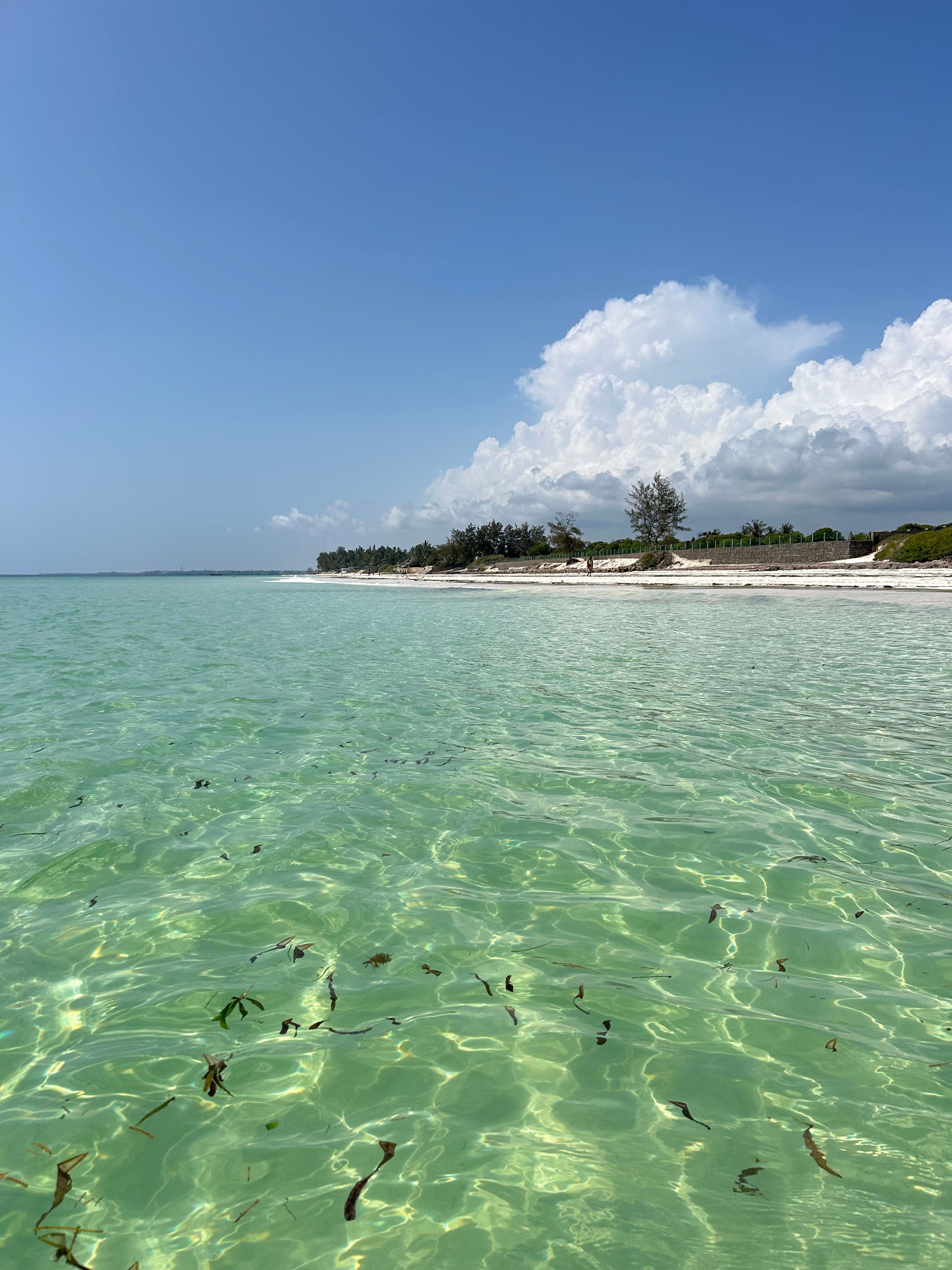
The sea is calmer and cleaner from November through April, and a little rougher and windier from June through September. Both seasons are beautiful in their own way. A personal favourite among our local team is September: dry, stunning, and slightly cooler than peak season without being cold. December, January and February are wonderful for the ocean. November and early December offer the calmest conditions for snorkelling and diving, though it is also the hottest period without much breeze.
Seaweed
Be aware that seaweed can appear on the beaches and is difficult to predict. It changes every year and often comes more during rainy periods. If one beach has seaweed, explore others nearby because it accumulates differently depending on currents. December through March usually sees the least seaweed but we cannot guarantee conditions and this fluctuates year to year.
The busiest period
December and January are when Kilifi transforms. The Kilifi New Year Festival is one of the most celebrated music and arts events in East Africa, drawing huge crowds, international DJs and a genuinely electric atmosphere. It is the most exciting time to visit. If you want a peaceful and private holiday, avoid this window. The quietest months are the rainy ones, but because Kilifi is a lived-in town it stays open and active throughout the year.
For kitesurfers
There are two wind seasons. The Kaskazi blows from the north between January and March: consistent wind with a calmer, more beautiful ocean. The Kusi blows from the south between July and September: a little stronger and rougher but great for all levels. This year the Kusi started unusually early in April. Kilifi is a fantastic kite spot and Bofa Beach is a hidden gem for kitesurfing. Learn with Salty's Kite Surfing School on Bofa Beach or the newer Tribal Kite School.
Areas of Kilifi Explained
Kilifi is more spread out than it looks on a map. The different areas have distinct personalities and where you stay shapes your experience significantly.
| Area | Vibe | Best for | Highlight | |
|---|---|---|---|---|
| Kilifi Town | Busy, authentic Kenyan town life | Local food, transport, markets | Banks, Naivas supermarket, matatu stand | |
| Bofa Beach | Quiet, residential, coconut palms | Beach lovers, families, rental properties✓ | Long white beach, kite school, Salty's | |
| Mnarani and the Plantation | Expat community, creative, wellness-focused | Long stays, creatives, families with kids | Kivukoni School, Food Movement, baobab trees | |
| Mnarani Town | Busy, local, chaotic in a good way | Getting a feel for real local life | South side of the creek, local energy | |
| Takaungu | Off the beaten path, strong Swahili culture | Explorers, photographers, culture seekers | Ancient village, beautiful creek, authenticity |
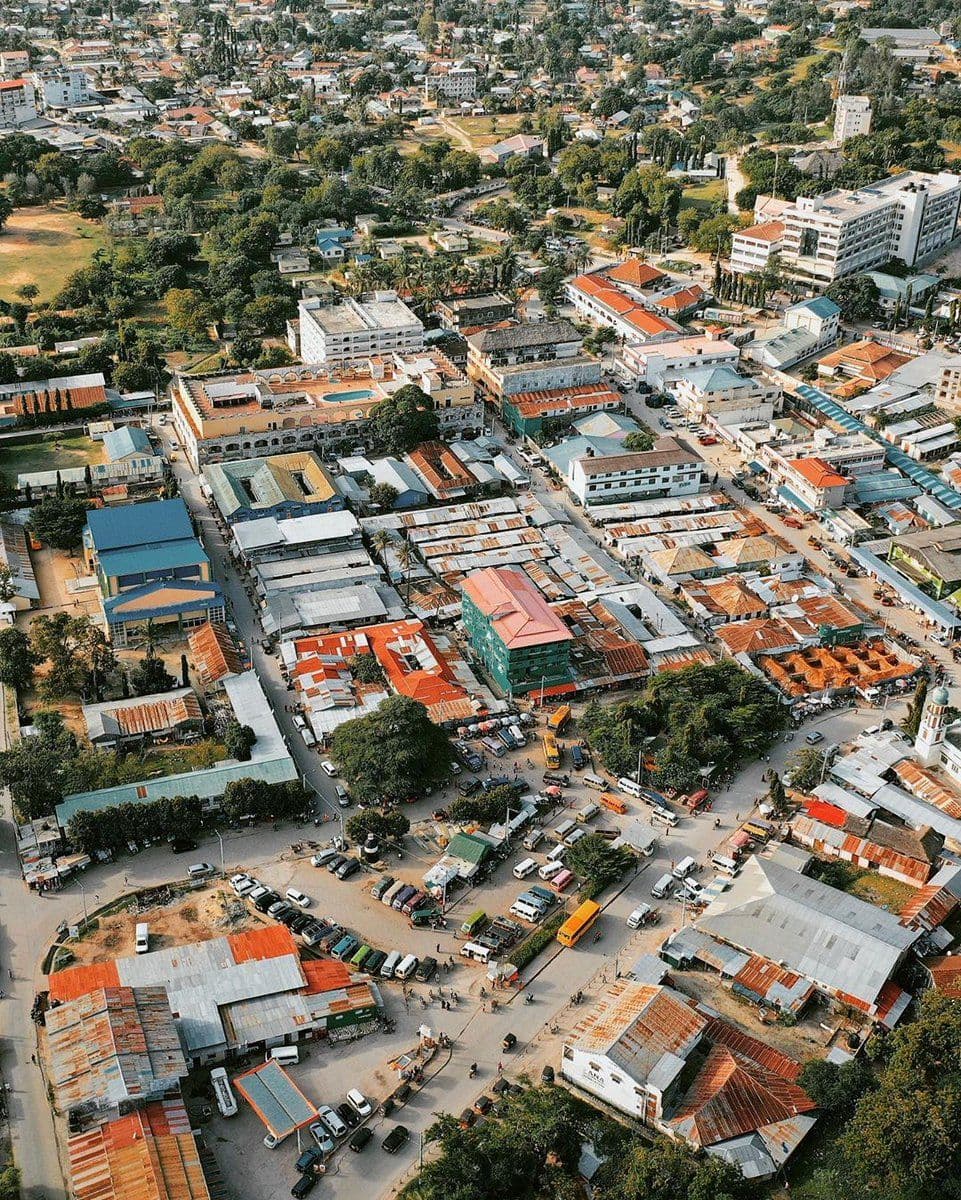
Kilifi Town
The commercial centre. This is where you find the main supermarket, banks, the market, the police station and the matatu stand. It is busy and authentically Kenyan. Not a beach area, but essential for supplies and great for cheap, delicious local food.
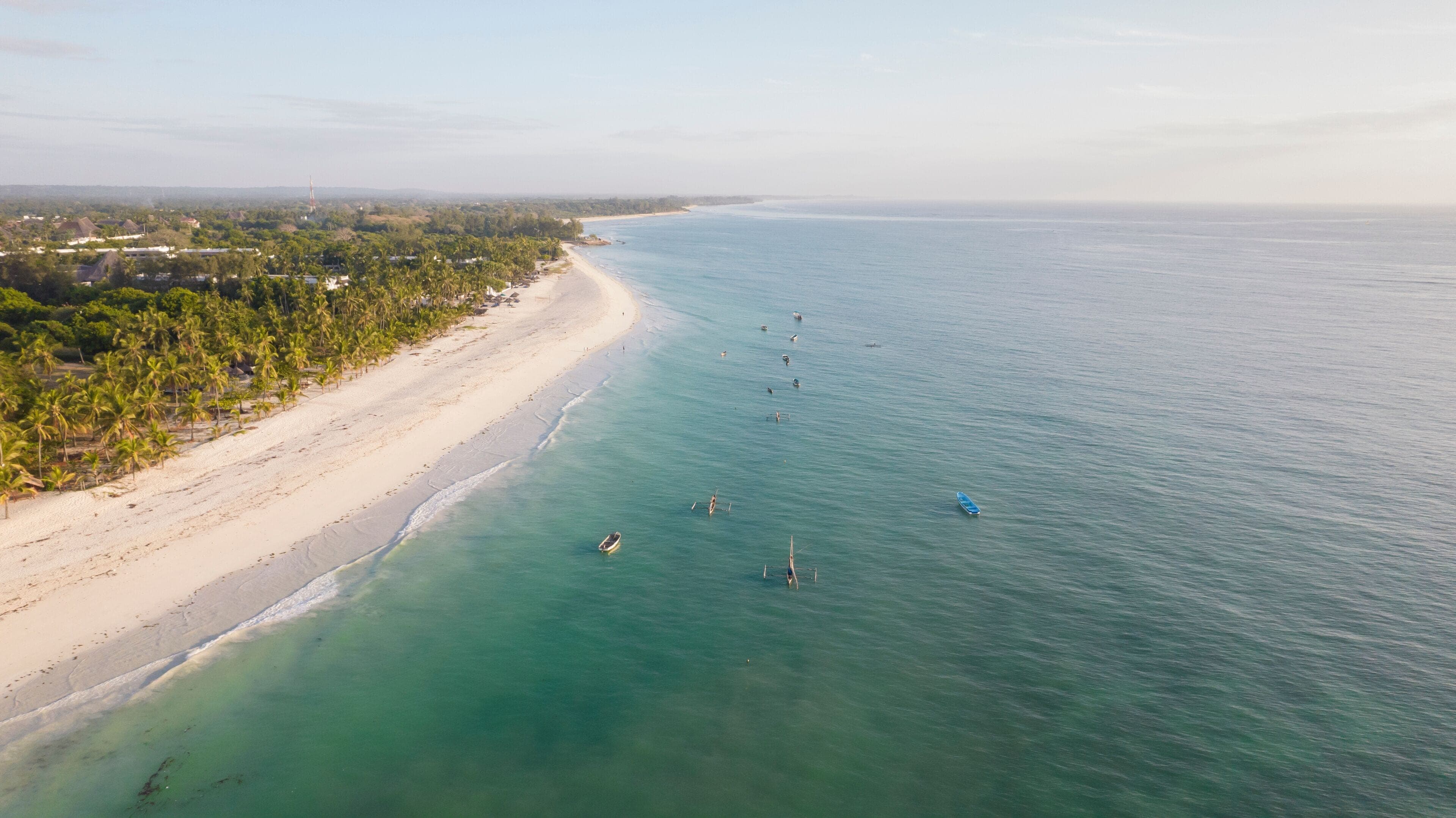
Bofa Beach
The best beach in Kilifi. Long, white, quiet and beautiful. A residential area with a mix of local families and expats. A few restaurants and bars are opening along the beach road, boutique hotels are beginning to emerge, and there are stunning beachfront rental properties. Salty's Kite Surfing Village is the social hub of Bofa Beach. New spots including Tribal Table restaurant and Somewhere Cafe are coming very soon.
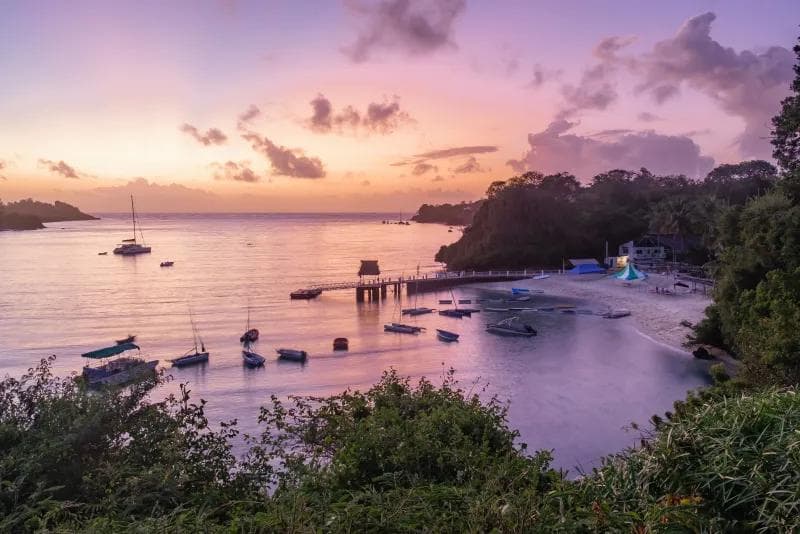
Mnarani and the Plantation
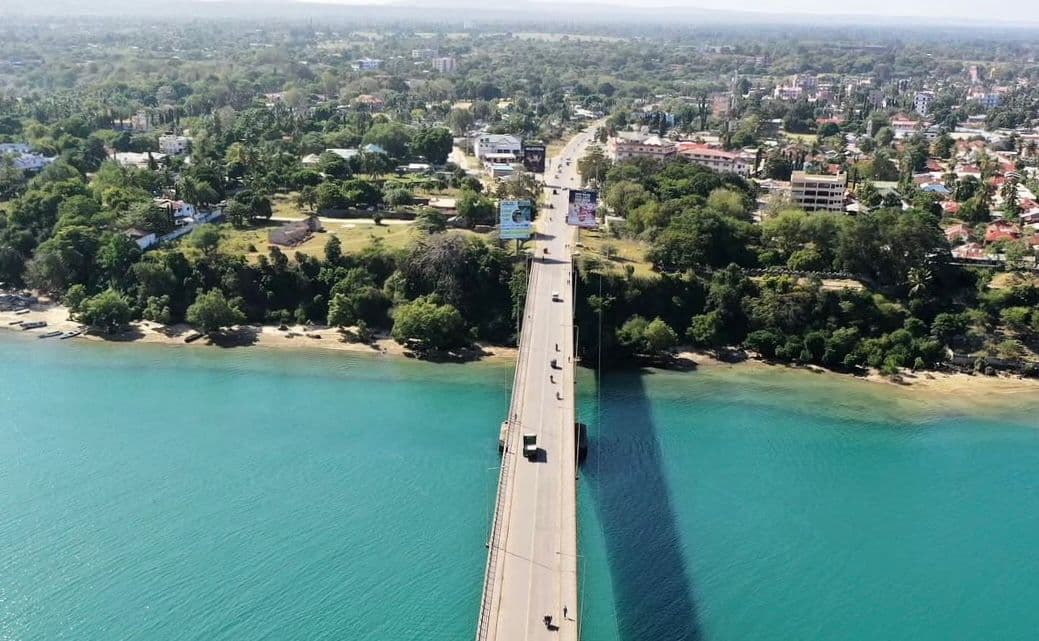
The south side of the creek is where much of the expat community has settled. The Plantation is a large and beautiful farm that used to grow sisal and raise cattle, now developing into a residential community. Weekly fitness and yoga classes take place here, the Food Movement restaurant serves great food, the Kivukoni international school provides education for resident families, and the Green Heart of Kenya housing project is developing here. The farm itself is stunning with old baobab trees creating a magical landscape. Mnarani Club hotel sits on the creek here and now has padel courts and a gym. Mnarani town at the south end of the bridge is a small lively local spot where many Kilifi residents live.
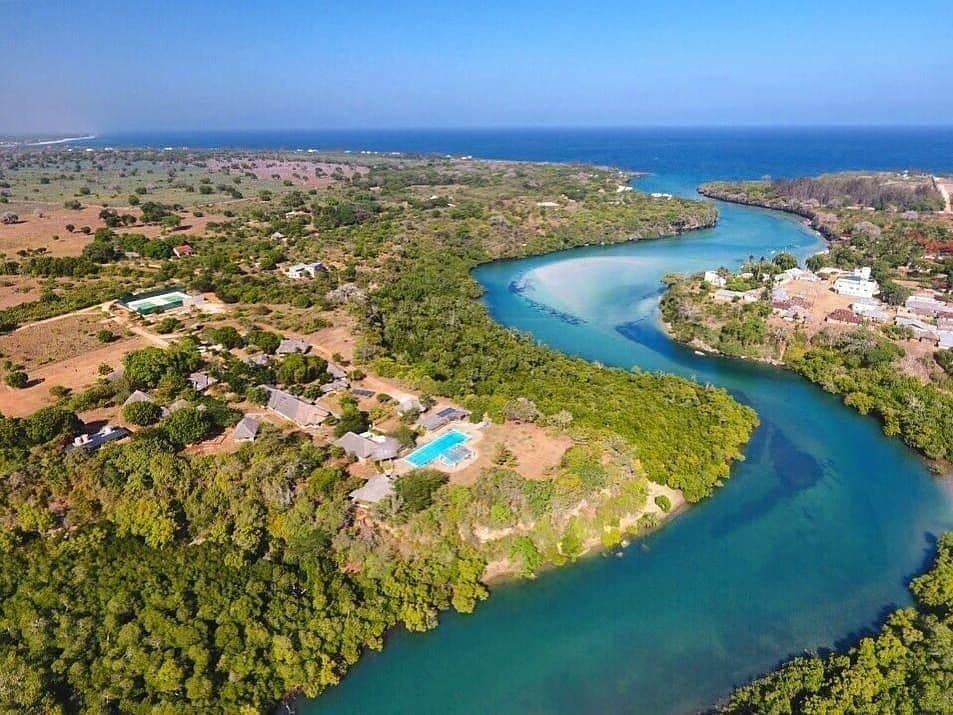
Takaungu
A lesser-known creek about 15 kilometres south of Kilifi town. The south side has an ancient Swahili village with a strong historical atmosphere. The north side borders the Plantation farm. Worth visiting for anyone interested in the authentic history of the Kenyan coast.
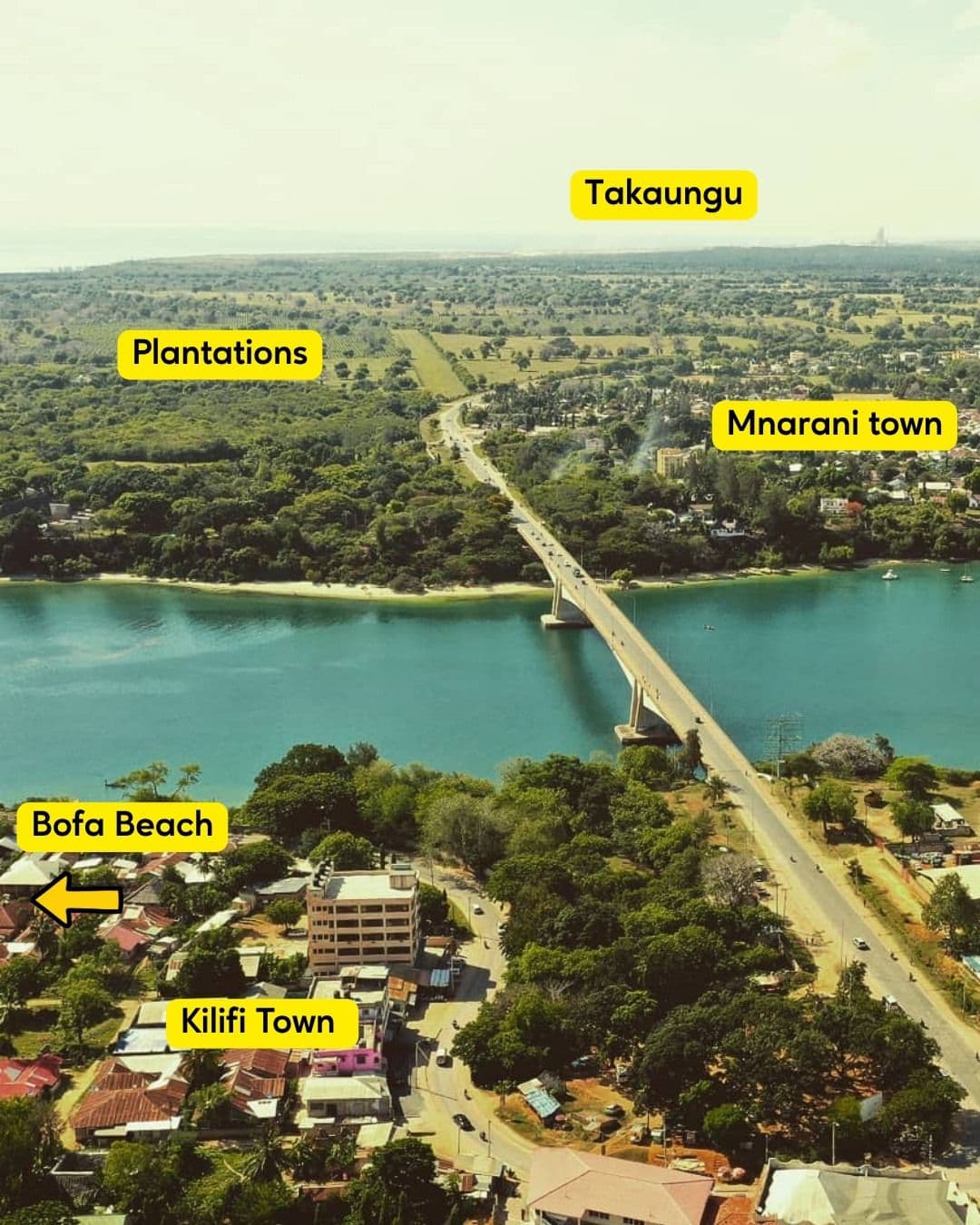
Kilifi Areas Explained
How to Get Around Kilifi
Kilifi is quite spread out. From one end of Bofa Beach to the Plantation on the south side of the creek can be a 20 to 25 minute drive. The main options are tuk-tuks, boda bodas (motorbike taxis) and rented cars or motorbikes. There are plenty of friendly drivers who will be eager to take you wherever you want to go. If you are in the town centre you can also walk, and if you enjoy long beach walks, Bofa is a wonderful way to explore on foot.
Price guide and tips
Always agree the price before getting in, not after. Carry small change because Mpesa mobile banking is widely used and many drivers do not carry change. If you only have large notes, ask at a petrol station to get change. A tuk-tuk or boda boda ride anywhere within Kilifi should never cost more than KSh 600 maximum, even for the longest journey of around 9 to 10 kilometres. Shorter trips typically cost KSh 150 to 350. If a short distance is quoted above KSh 500, bargain. Tuk-tuks are generally a little more expensive than motorbikes. Do not be afraid to negotiate. Bargaining is completely normal in Kenyan culture and drivers will not be offended.
At night
Be a little more cautious at night. Once you find a driver you like and trust, take their number and call them directly to pick you up from venues in the evening. Overall Kilifi is a very safe place and Kenyans are incredibly friendly people.
On prices and bargaining
As a visitor you may sometimes be quoted tourist prices. Use the price guide above as your reference point and bargain confidently but politely. It is normal here and part of the experience.
Where to Shop in Kilifi
Kilifi town has two main large supermarkets, Naivas, which stocks most essentials and is a popular, reliable choice, and the newer Carrefour Kilifi, located at the Rubis petrol station which also has a large range of goods, and more imported options than Naivas if thats what you're after. Naivas is the more affordable of the two and both also stock fruit and vegetables for your convenience. However, for fruit and vegetables the local market in town is excellent and great value with far fresher produce than any supermarket and shopping hear supports local business owners and farmers. There are also two smaller convenience stores called Express Shop: one at the start of the Bofa road and one on the south side of the creek bridge at the petrol station. Handy for top-ups if you are staying in Bofa or Mnarani without wanting to drive into town but usually a little bit on the pricey side.
Carrefour, Naivas and express shop all stock alcohol, but if youre specifically looking for an alcohol shop, Kioko, next to Naivas is your best bet.
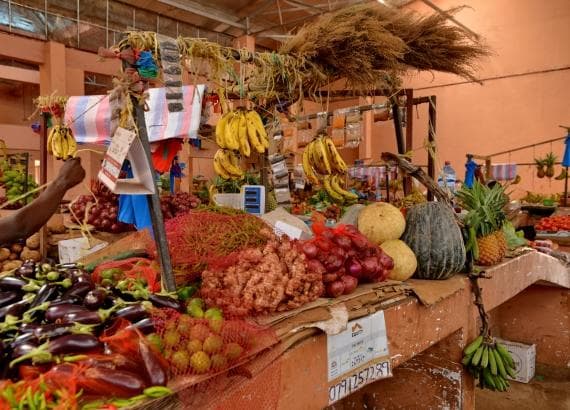
Kilifi fruit and vegetable market
Where to Stay in Kilifi
This is where Kilifi shows its one genuine limitation compared to Watamu: there is significantly less accommodation. But the options that exist have real character, and in some categories Kilifi actually excels.
Hotels in Kilifi include Mnarani Club, Maya Kobe, Salty's, Distant Relatives, Kilifi Bay and Silver Palms. Options are limited but each has its own character and loyal following. New properties are coming: Arcadia is one to watch, and there are excellent options on Airbnb that will soon be listed directly on this site for easy and trusted booking.
For backpackers and solo travellers, Distant Relatives Ecolodge is the standout choice: a lively, well-run spot on the creek with dorm beds from around KSh 2,000 and private rooms from KSh 5,000. It is also one of the social hubs of Kilifi, hosting regular events, live music and communal dinners.
For groups and families, Kilifi excels with beautiful private villa and rental property options along the creek and near Bofa Beach. These often come with private pools, staff and direct water access, and split between a large group they represent outstanding value. Many stunning properties will be listed directly on this website very soon.
Ask your host
Your accommodation can often help arrange taxis, transfers, day trips and activity bookings. Always ask them first before trying to organise things independently.
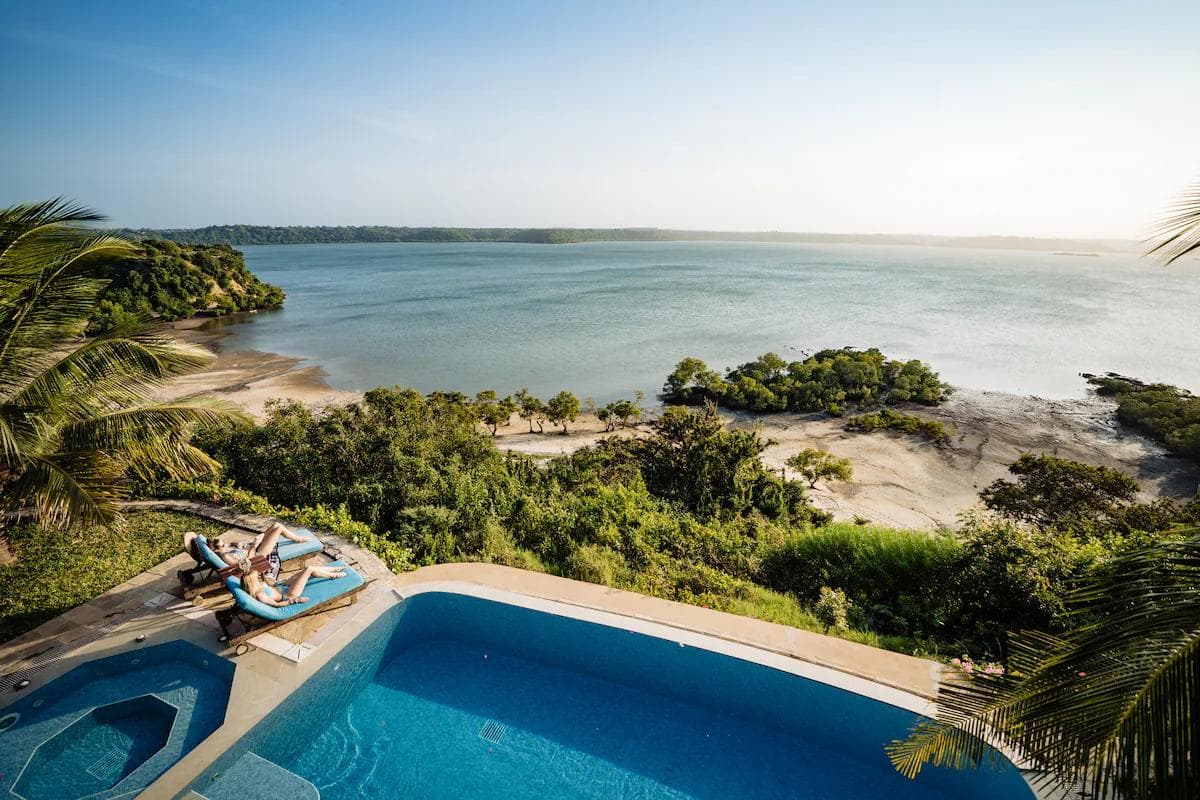
Creek view rental accommodation
What to Do in Kilifi
Kilifi has more to do than first appearances suggest. The activity scene is built around the creek, the beach and the community, and it rewards those who take the time to settle in and discover it.
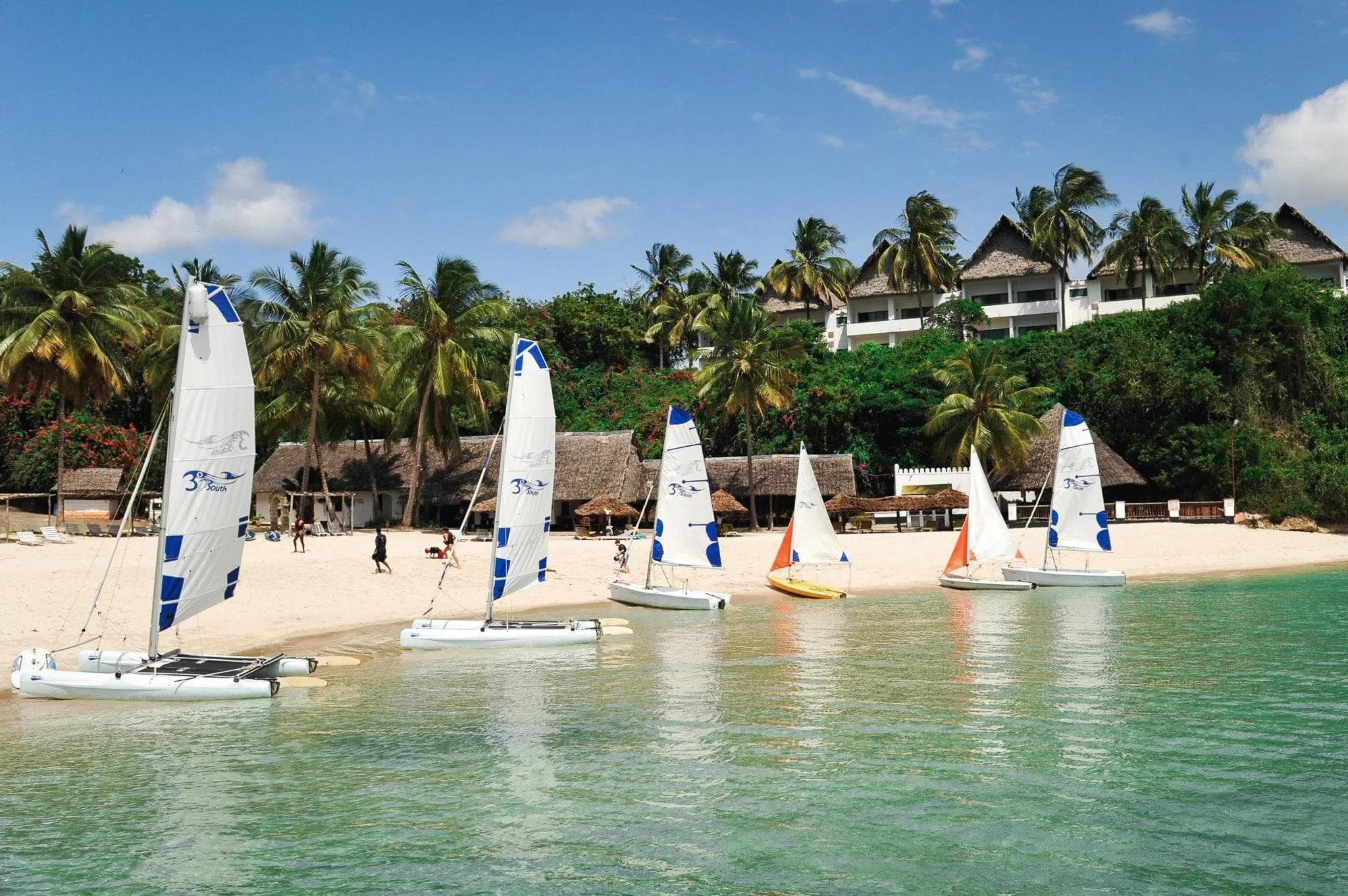
Watersports at 3 Degrees South
3 Degrees South is the watersports centre on Kilifi Creek and one of the best facilities of its kind on the Kenyan coast. Here you can learn to sail, kayak, waterski, wakeboard or scuba dive. They offer courses for beginners as well as rental and support for more experienced participants. The creek provides an ideal sheltered environment for learning without the unpredictability of the open ocean.
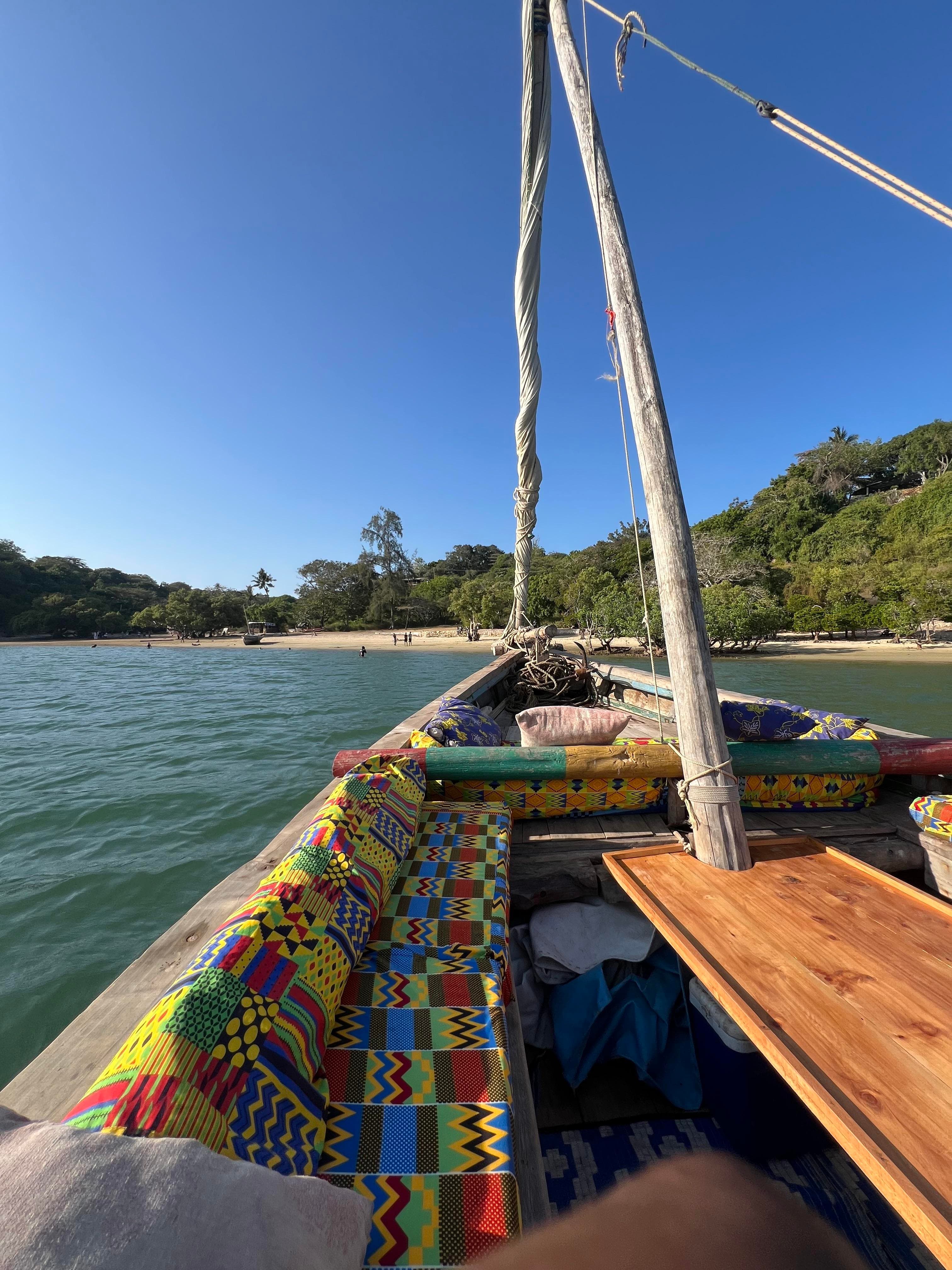
Sunset dhow cruise
A sunset dhow cruise on Kilifi Creek is one of the most memorable experiences in Kenya. As the sun drops behind the baobabs and the water turns gold, the pace of life slows to something close to perfect. This is not to be missed.
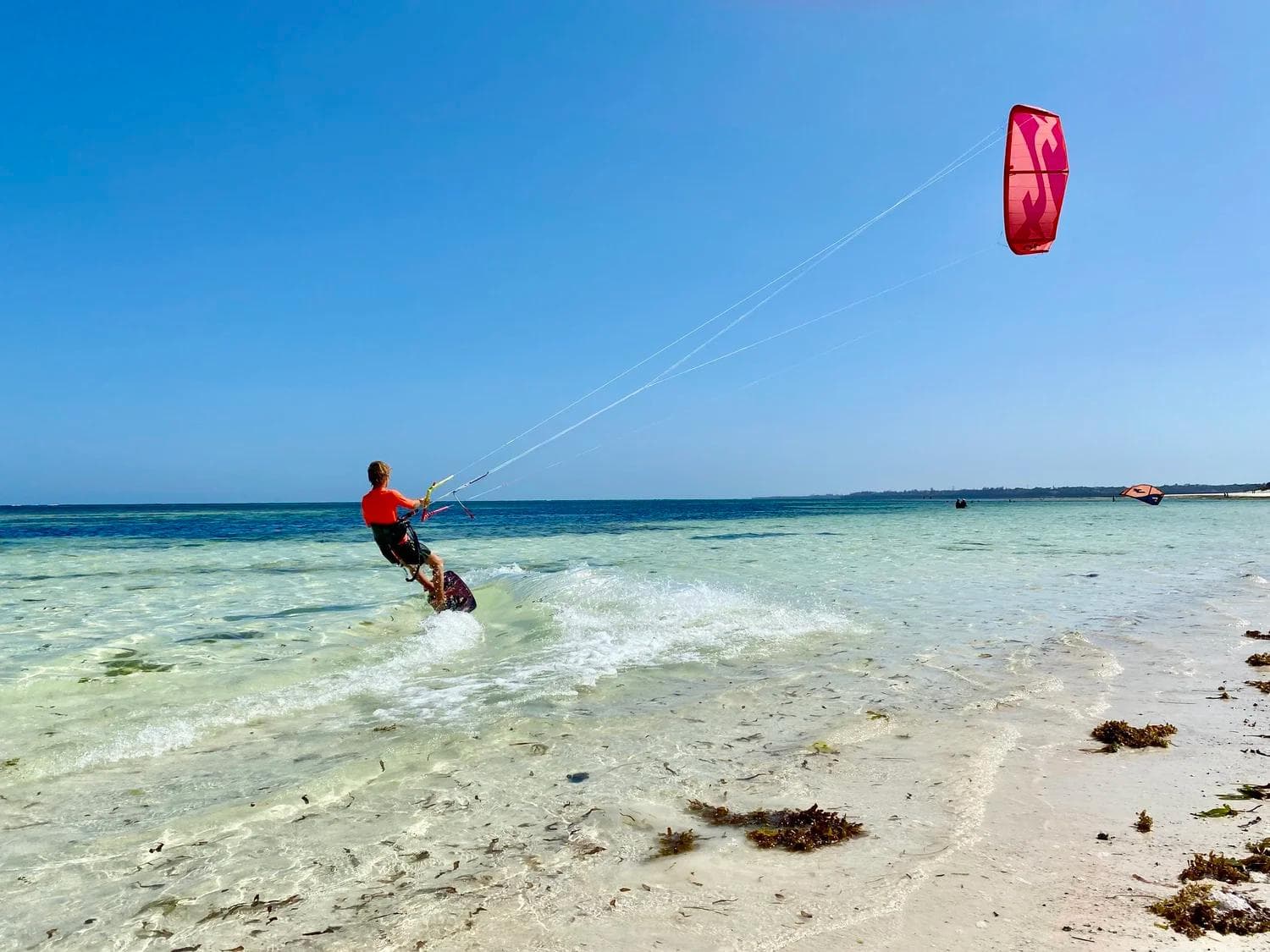
Learn to kitesurf
Salty's Kite Surfing Village on Bofa Beach is the original kite hub and a central social spot as well as a school. The newer Tribal Kite School is also opening very soon on Bofa beach. Kilifi offers fantastic conditions for all levels, with flat water on the creek for beginners and open ocean options for more advanced riders.
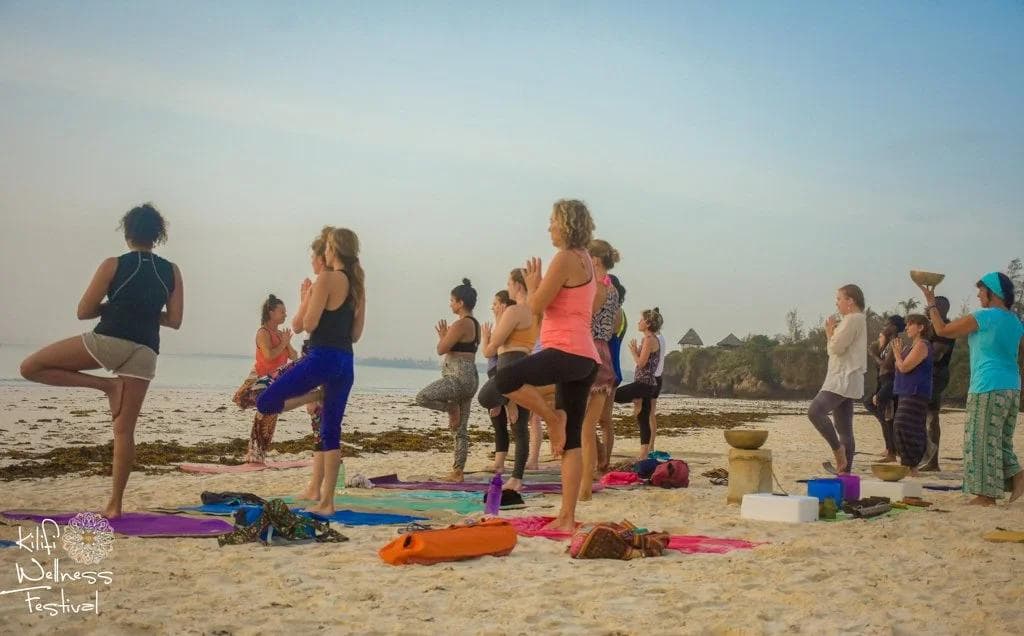
Yoga, wellness and movement
Kilifi has a genuine and growing wellness scene. Weekly community yoga classes happen across the area in beautiful outdoor settings. There are also breathwork sessions, ice baths, ecstatic dance events, fitness classes, massages and spa treatments. None of this feels performative or expensive. It is woven naturally into community life.
Events, music and community gatherings
The Kilifi New Year Festival between Christmas and New Year is one of the most celebrated music and arts festivals in East Africa. The Kilifi Wellness Festival happens twice a year. Beyond those, there are regular markets, sundowner sessions, live music nights, art exhibitions and pop-up dinners throughout the year.
Other activities
Bofa Beach on a quiet weekday morning is one of the most peaceful places on the Kenyan coast, often completely empty. Fishing trips, sunset drinks on the creek, exploring Takaungu's ancient Swahili village, and simply walking the beach road are all part of what makes Kilifi special. It is quieter overall than Watamu or Diani, and that is exactly the point.
Where to Eat in Kilifi
Kilifi does not have the most restaurant options but what it has is genuinely great and slowly but surely, However, the food scene is growing! and the restaurants that exist tend to be creative, community-driven and really good.
Food Movement in the Plantation is a wonderful spot for healthy, thoughtful food in a beautiful farm setting.
Salty's has three different locations across Kilifi, all serving great food in relaxed settings. Kilifi Boatyard is a classic and has been a local favourite for years. The Twisted Fig is the elevated option: yummy, more high-end and worth it for a special dinner.
Kilifi town itself has excellent and very affordable local food. Bahari, Village Dishes, Apache Indian and Fayaz Bakery all deserve an honourable mention. Vegan Basket is great for plant-based eating. Distant Relatives serves good food in a social atmosphere. Indigo Vibe is a newer cafe with great coffees and sandwiches.
The newest spots! Recently opened Asian Kitchen, Tribal Table and Non solo gelato kilifi
For Coffees:
And keep an eye out for somewhere cafe which is opening soon on Bofa Beach! Hopefully the food scene in Kilifi continues to develop as the community grows.
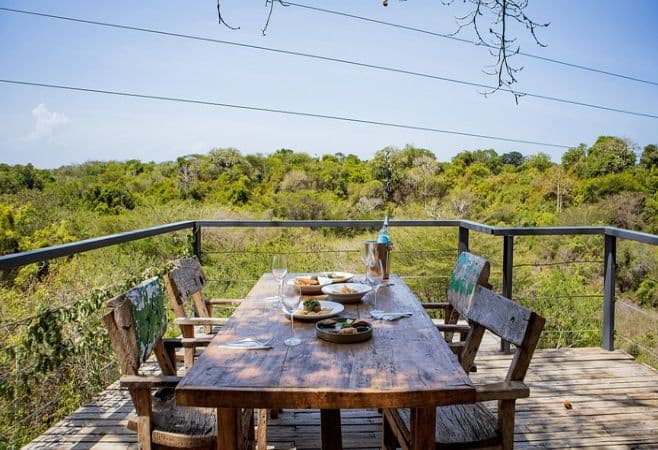
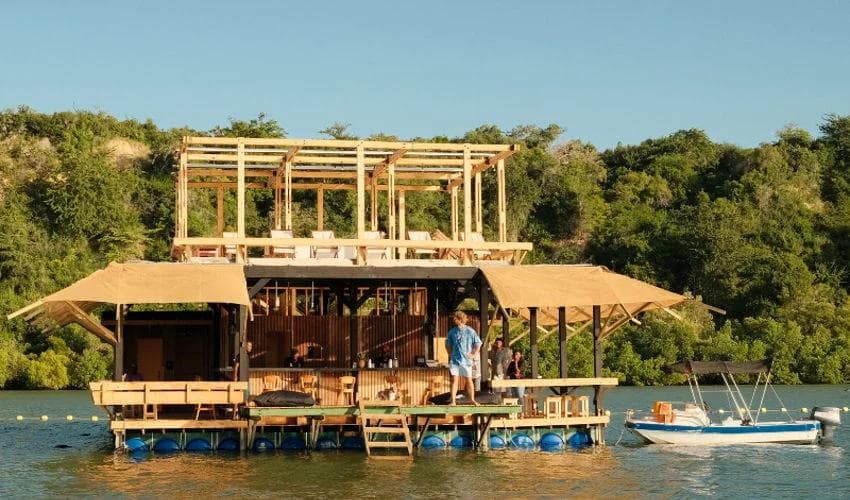
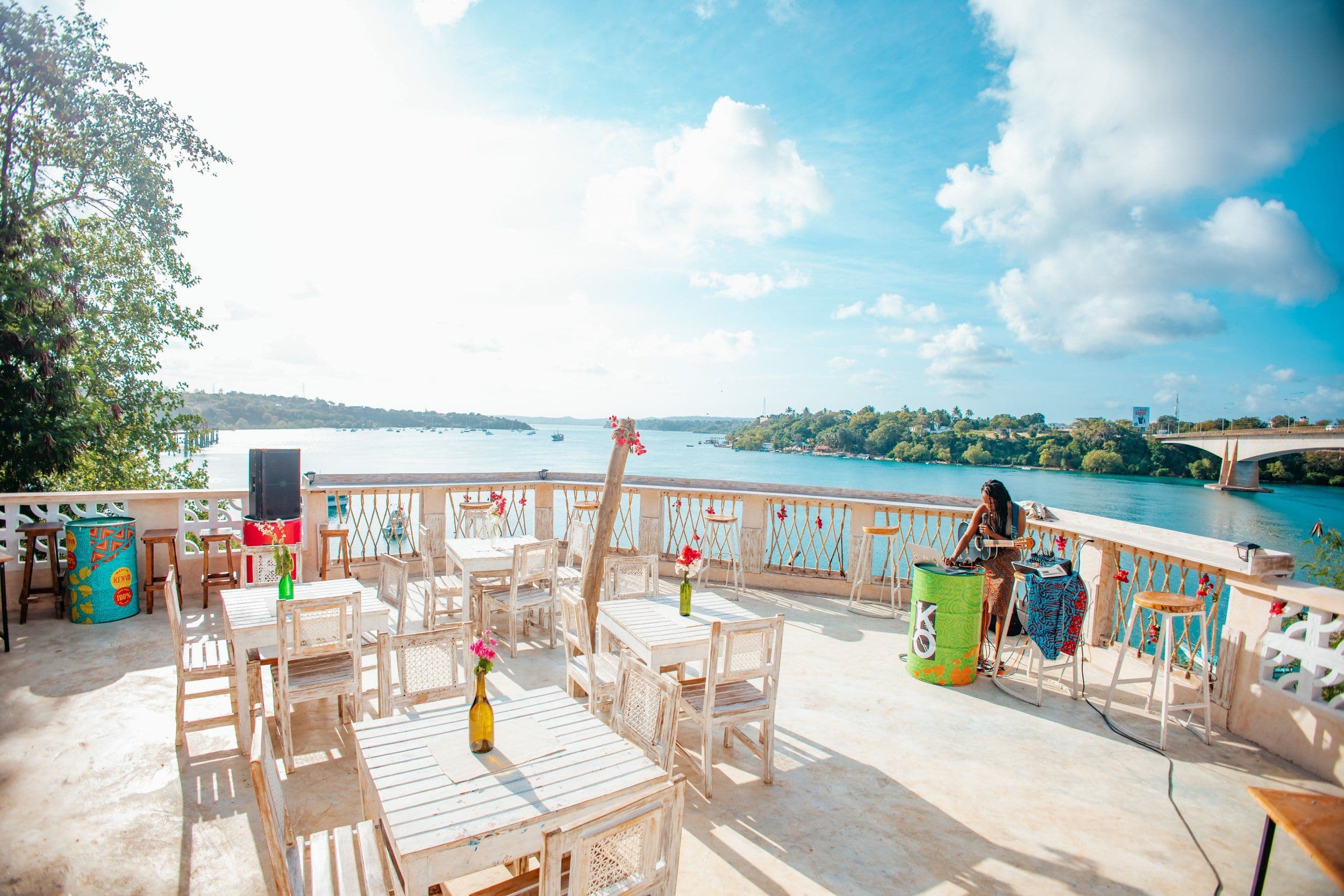
Here is the thing about Kilifi that surprises most visitors: the nightlife is better than Watamu's, but the daytime is quieter. On event nights, whether it live music at the terrace, a DJ set at Distant Relatives, or a pop-up dinner on the creek, the energy is electric and the crowd is a genuine mix of Kenyans, long-term expats and passing travellers. These nights feel special because they emerge from a real community rather than a tourism machine.
But between events, Kilifi is peaceful. There is no strip of tourist bars. There is no nightly entertainment schedule. If you want something to do on a random Tuesday, you will probably end up at a local bar watching football, joining a sunset session at the creek, or cooking dinner with people you met that morning. This is the rhythm, and most people who love Kilifi love it precisely because of this balance.
One of the best things about the social scene here is that you meet more Kenyans. Kilifi's community is more integrated: expats and locals genuinely socialise together, and you are far less likely to find yourself trapped in a tourist bubble.
Living in Kilifi
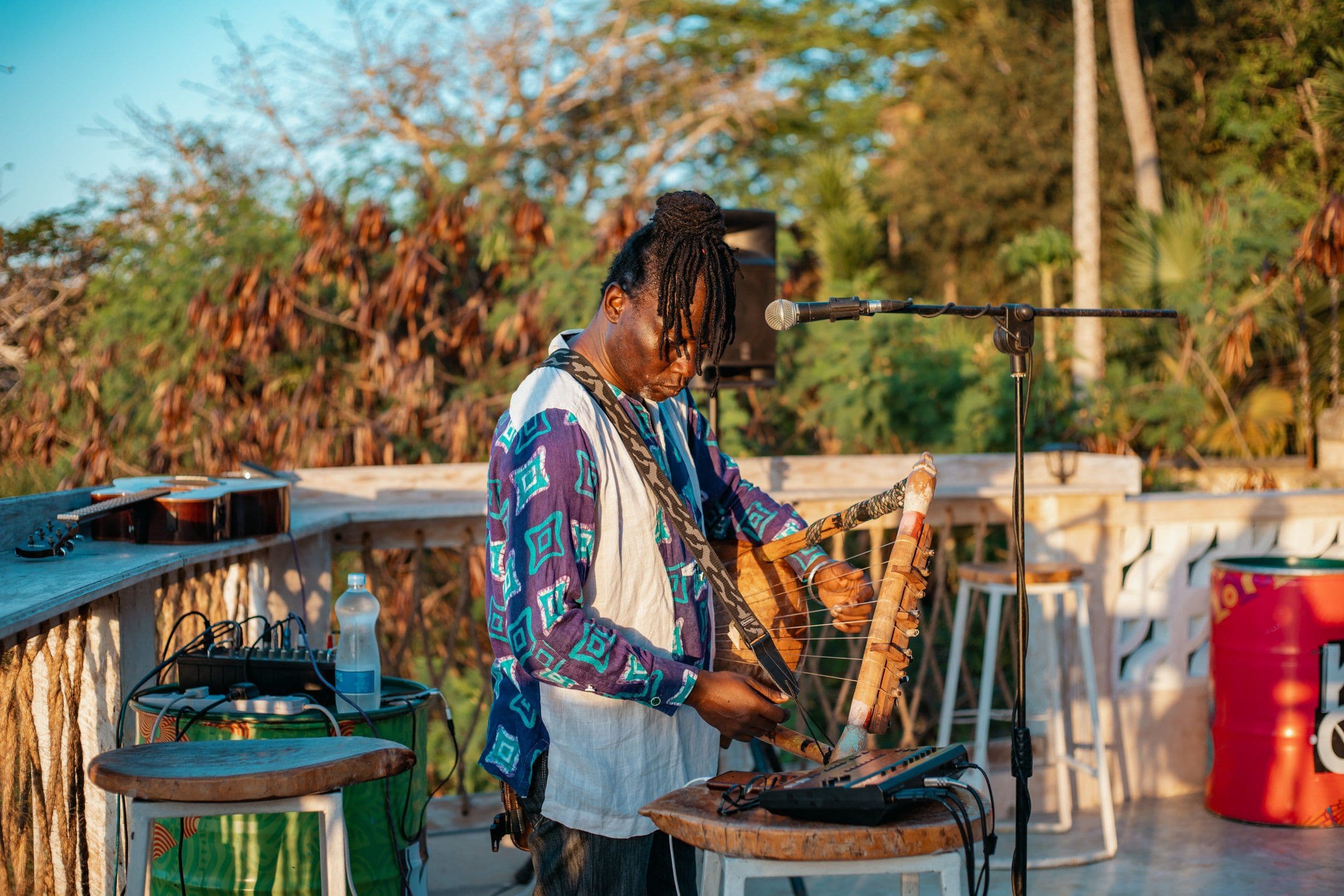
An increasing number of people are not just visiting Kilifi. They are moving here. The town has become a genuine community hub for remote workers, creative professionals, wellness practitioners, and families with young children who are choosing Kilifi over louder and more established coastal towns.
For families, the infrastructure is better than you might expect. Kivukoni School is a well-regarded British international school offering education from early years through secondary level.
Read our full guide to Kivukoni School here. The 3 Degrees South water sports centre runs children's sailing and watersports programmes. The creek provides a safe, natural playground that most children in the world can only dream of. The community is tight-knit and family-friendly: children grow up knowing their neighbours, playing on the beach, and learning to sail before they can ride a bicycle.
The cost of living is significantly lower than Nairobi or Mombasa. Rent for a two-bedroom house near the creek runs KSh 35,000 to 60,000 per month. A three-bedroom villa with a garden is KSh 70,000 to 100,000 per month. Fresh produce is abundant and cheap at the local markets. The main trade-off is convenience. Kilifi does not have large shopping centres, international hospitals, or the full infrastructure of a major city. Mombasa is 1.5 hours away for anything you cannot find locally.
Practical safety notes
Kilifi is generally safe but use common sense. Avoid walking alone on the beach after dark. Keep valuables out of sight. Malaria is present on the coast: take prophylactics and use repellent, especially around the creek at dusk. Tap water is not safe to drink. Stick to bottled or filtered water.
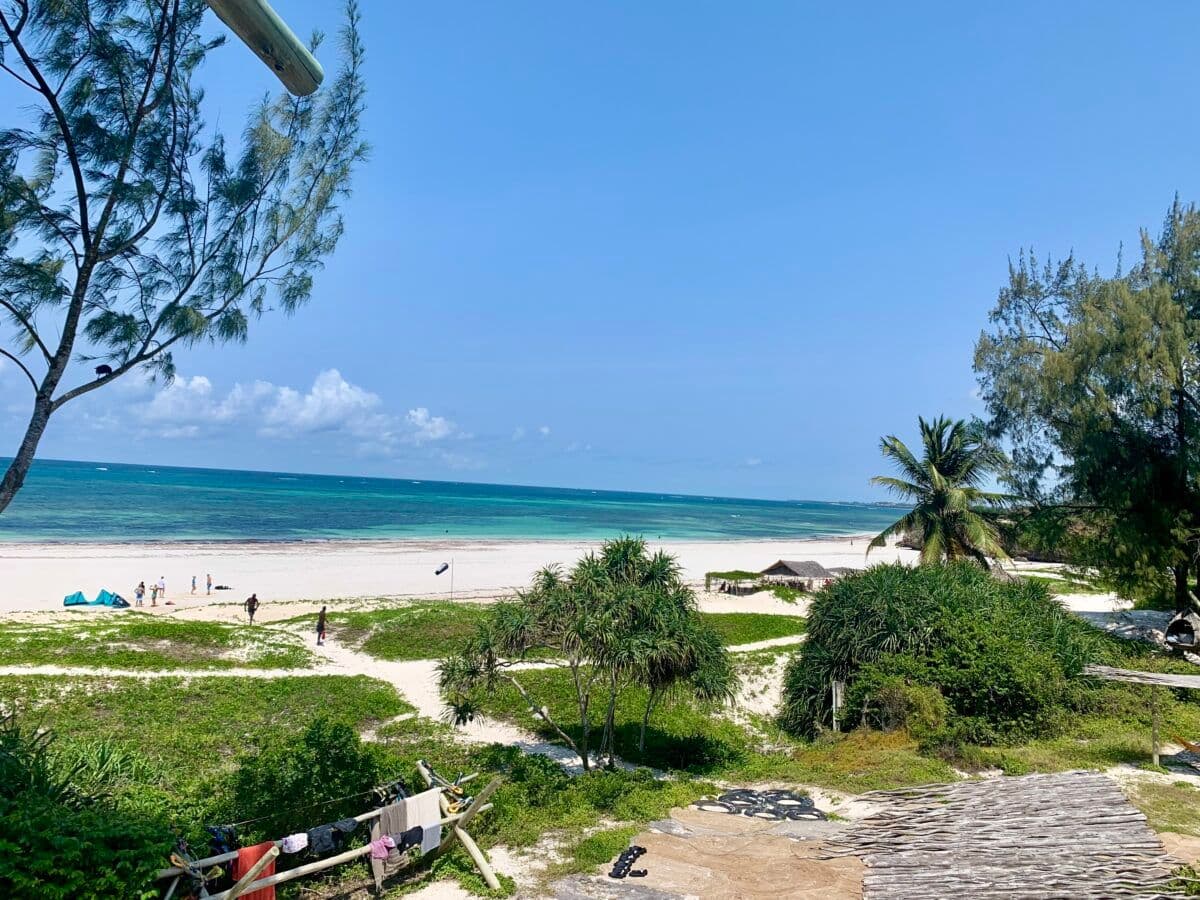
Saltys beach hangouts on the weekend when you live in Kilifi
How Much Does Kilifi Cost?
Kilifi is more affordable than Watamu across almost every category. Here is a realistic breakdown for 2026.
| Category | Budget | Mid-range | Luxury |
|---|---|---|---|
| Accommodation (per night) | KSh 2,000 to 4,000 | KSh 5,000 to 12,000 | KSh 15,000 to 25,000 |
| Meals (per day) | KSh 500 to 1,000 | KSh 1,500 to 3,000 | KSh 4,000 to 8,000 |
| Transport (per day) | KSh 200 to 500 | KSh 500 to 1,500 | KSh 2,000 to 5,000 |
| Activities (per day) | KSh 500 to 1,500 | KSh 2,000 to 5,000 | KSh 5,000 to 15,000 |
| Drinks and nightlife | KSh 300 to 800 | KSh 1,000 to 2,500 | KSh 3,000 to 6,000 |
A backpacker staying at Distant Relatives, eating local food and joining free community activities can spend as little as KSh 3,000 to 5,000 per day. A mid-range traveller in a guesthouse with restaurant meals and creek activities will spend KSh 8,000 to 18,000 per day. Groups renting a private villa and splitting costs can paradoxically spend less per person than mid-range travellers while enjoying private pools and personal chefs.
Development and Investment Growth in Kilifi
Kilifi is growing fast and the pace of development is accelerating. Houses, apartments, boutique guesthouses and residential plots are being built across the area and new projects are launching regularly. Land prices have risen significantly over the past five years and continue to climb as more people discover the area.
The Plantation on the south side of the creek is a clear example of this growth. A large farm that once grew sisal and raised cattle has transformed into a developing residential community, selling plots and attracting investors and families who want to build their own homes in a beautiful, community-driven setting. Bofa Beach is also seeing new development, with boutique hotels, restaurants and rental properties beginning to emerge.
Infrastructure is improving alongside private investment. International attention on Kilifi is increasing and investors from Nairobi, Europe and beyond are starting to take serious notice. Kilifi is not just a place to visit anymore. It is a place to invest in. Compared to Mombasa or Diani, land and property here still offers significantly better value while delivering the lifestyle, community and natural beauty that makes the investment worthwhile. The trajectory is clear and those who move early tend to benefit the most.
The Honest Assessment
Kilifi is not for everyone, and that is exactly what makes it special. If you want a beach holiday with a menu of organised excursions, a strip of restaurants to choose from, and the safety net of tourist infrastructure, Watamu is a better choice. If you want a place that feels real: where you will meet the people who live there, where the creek replaces the pool, and where the best experiences come from saying yes to whatever is happening that evening, Kilifi will get under your skin.
The beaches are quieter than anywhere else on the north coast. There are no hawkers. Bofa Beach on a weekday morning can be completely empty: just you, the sand and the Indian Ocean. The creek is genuinely one of the most beautiful natural features on the Kenyan coast, and the water sports available through 3 Degrees South would cost three times as much in a resort town.
You will meet more Kenyans here than in Watamu or Diani. The community is less of a tourist bubble and more of a real, functioning multicultural town. The expat community is creative and interesting: musicians, artists, photographers, yoga teachers, entrepreneurs, rather than the retiree and holiday crowd you find elsewhere on the coast.
The honest downsides: accommodation options are limited and book out fast in high season. There are fewer restaurants than Watamu. If you are a solo traveller or couple wanting a convenient, hassle-free beach break, the lack of mid-range hotels can be frustrating. The town infrastructure is basic. And getting to Kilifi from Nairobi is a full travel day.
Kilifi verdict
Choose Kilifi if you want to experience the Kenyan coast as a local, not as a tourist.
👍 Reasons to go
- ✓Kilifi Creek: one of the most beautiful spots on the Kenyan coast
- ✓Genuine creative community of artists, musicians and entrepreneurs
- ✓Best nightlife and social events on the north coast
- ✓More affordable than Watamu across every category
- ✓Quiet, empty beaches with zero hawkers
- ✓Excellent water sports at 3 Degrees South
- ✓Meet more Kenyans and experience far less of a tourist bubble
- ✓Kivukoni international school makes it viable for families long-term
- ✓Bofa Beach: stunning and often deserted
👎 Think twice if...
- ✗Limited accommodation with few mid-range hotel options
- ✗Fewer restaurants than Watamu or Diani
- ✗Basic town infrastructure without big supermarkets
- ✗Full travel day from Nairobi
- ✗Can feel very quiet between events if you need constant stimulation
🎯 Perfect for...
A Few Swahili Phrases for Kilifi
Kenyans genuinely appreciate any effort you make with Swahili. Even a few words will get you smiles, better prices and a warmer welcome. Here are the most useful phrases for getting around Kilifi.
Essential Swahili for Kilifi
Jambo or Mambo: Hello. Poa: Cool or great, the response to Mambo. Habari yako: How are you? Nzuri: Good or fine. Asante: Thank you. Asante sana: Thank you very much. Tafadhali: Please. Hapana: No. Ndio: Yes. Kwaheri: Goodbye. Siku njema: Have a good day. Karibu: Welcome or you are welcome. Pole: Sorry or take it easy. Ni ngapi or Bei gani: How much does it cost? Nataka kulipa: I want to pay. Maji: Water.
In Kenya it is considered polite to greet people properly before asking for anything. Start with Jambo or Habari, exchange a few words, then make your request. This small effort is noticed and genuinely appreciated.
Unique Things About Kilifi
Baobab Studio is one of the most extraordinary recording facilities in the world, sitting among ancient baobab trees. International artists come specifically to record here. You will not find that in Diani.
The creek is unlike anything else on the north coast. A vast, calm tidal inlet that transforms with the tide, creates sandbanks in the middle of what was deep water an hour before, and provides a sheltered environment for watersports, dhow rides, sunsets and swimming that the exposed ocean cannot offer.
The community integration here is real. In most Kenyan coastal towns, expats and locals live parallel lives that occasionally overlap. In Kilifi they genuinely socialise together, collaborate on businesses and create events that both groups attend.
Kilifi New Year Festival is one of East Africa's most celebrated music events and it happens right here on the creek. The combination of world-class DJs, a stunning natural setting and a genuine community atmosphere makes it unlike any festival you will find elsewhere in the region.
Bofa Beach on an ordinary Tuesday morning is often completely empty. Not quieter than other beaches. Empty. Miles of white sand and the Indian Ocean entirely to yourself. That is increasingly rare in 2026 on any coastline.
The padel courts at Mnarani Club, the kite school at Salty's, the watersports centre at 3 Degrees South, the wellness classes in the Plantation, and the recording studio in the baobabs: Kilifi packs an extraordinary range of activities into what appears on the surface to be a quiet coastal town.
Frequently Asked Questions About Kilifi
Is Kilifi safe?
Yes. Kilifi is generally safe. Use common sense: avoid walking alone on the beach after dark, keep valuables out of sight, and be aware of traffic on the roads. The local community is welcoming and the established expat presence means there is always a network of people to connect with.
How do I get from Mombasa airport to Kilifi?
Take a taxi or use Uber, which operates in Mombasa. The drive takes 1.5 to 2 hours and costs around KSh 6,000 to 8,000 by taxi. Your accommodation can often recommend or arrange a trusted driver.
Can I use a credit card in Kilifi?
Some hotels and restaurants accept cards, but cash and Mpesa are the main payment methods. Carry Kenyan Shillings in small denominations for boda bodas, markets and smaller restaurants.
What is the best time to visit Kilifi?
September is a local favourite: dry, beautiful and a little cooler than peak season. December through February offers the best ocean conditions. Avoid April through June unless you enjoy the quiet, green atmosphere of the rainy season. December and January are the most exciting and social time of year.
Is there reliable Wi-Fi in Kilifi?
Connections have improved significantly. Most guesthouses, cafes and co-working spots have reliable Wi-Fi. Safaricom is the strongest mobile network on the coast and a local SIM card with data is cheap and recommended.
Can I learn to kitesurf in Kilifi?
Yes. Salty's Kite Surfing Village on Bofa Beach and the newer Tribal Kite School both offer lessons for beginners. The creek and Bofa Beach both provide great conditions for learning and progression.
Is Kilifi good for families?
Very. Kivukoni School provides international education from early years to secondary level. The creek is a safe swimming environment. The community is genuinely family-friendly and children thrive here.
How far is Kilifi from Watamu?
About 45 minutes by road, making day trips between the two very easy.
What currency should I use?
Kenyan Shillings. You can exchange money at the banks in Kilifi town or at Naivas supermarket. USD and euros are accepted at some hotels and villas but you will get a better rate exchanging to KSh first.
Is there anything happening in the quieter months?
Yes. Because Kilifi is a functioning town rather than a pure tourist destination, local life continues year-round. Yoga classes, creek activities and local restaurants all operate outside peak season. Events thin out but something is usually on. Ask your accommodation or look for local community groups when you arrive.

KlicKenya